
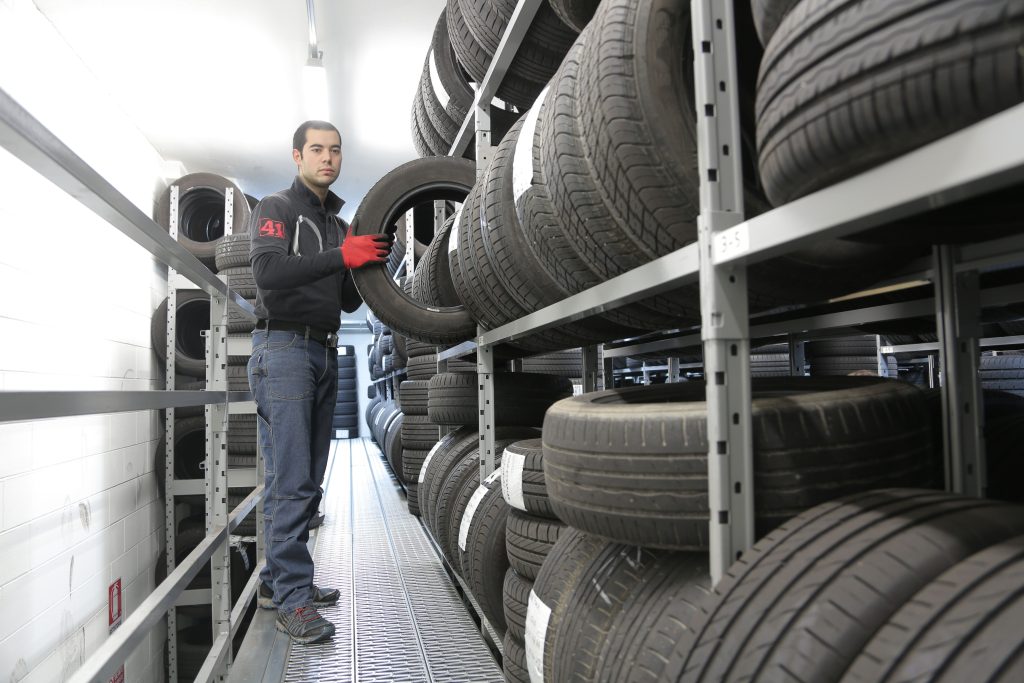
Tire Service & Replacement in Glendale, CA
Keep your vehicle safe, smooth, and ready for the road with professional
tire inspection, replacement, rotation, balancing, and maintenance services
from Perfect Auto.
Professional Tire Service at Perfect Auto
At Perfect Auto, we take great pride in helping our customers stay safe and
confident on the road with professional tire services for most makes and models.
Your tires are the only part of your vehicle that makes direct contact with
the road, which makes their condition extremely important. Proper tread depth,
tire pressure, balance, and alignment all play a role in how your vehicle
handles, brakes, and rides.
Whether your tires are wearing unevenly, your steering wheel is vibrating,
or it is simply time for a new set, our team can help inspect your tires and
recommend the proper service for your vehicle.
Why Are Your Tires So Important?
Tires affect nearly every part of how your vehicle interacts with the road.
They support the weight of the vehicle, provide traction, absorb road
imperfections, and allow your vehicle to accelerate, brake, and turn safely.
Braking
Proper tire tread and traction help your vehicle maintain grip
when slowing down or stopping.
Handling
Tire condition can directly affect steering response,
cornering stability, and overall vehicle control.
Ride Quality
Properly balanced and inflated tires help provide a smoother,
more comfortable ride.
Traction
Healthy tread helps your tires maintain contact with the road,
especially during wet or slippery conditions.
A Short History of Automotive Tires
Early automobiles used relatively simple solid rubber tires. While durable,
these tires offered very little comfort because they could not absorb road
imperfections the way modern tires do.
Pneumatic tires, which use air pressure to support the vehicle, became much
more common as automobiles developed. Over time, tire construction improved
dramatically with stronger materials, better tread designs, and more advanced
rubber compounds.
Modern radial tires are engineered to provide a balance of traction,
durability, comfort, fuel efficiency, and handling. Today’s vehicles also
use a wide range of tire sizes and speed, load, and performance ratings.
Why Tire Tread Matters
Tire tread is designed to maintain traction and help move water away from
the contact area between your tire and the road.
As tires wear, tread depth gradually decreases. When tread becomes too low,
traction can be reduced, especially on wet roads.
cracking, punctures, sidewall damage, and age are also important factors
when evaluating tire condition.
What Causes Uneven Tire Wear?
Uneven tire wear is often a sign that something else may need attention.
When caught early, it may be possible to prevent unnecessary tire wear and
extend the life of your tires.
- Incorrect wheel alignment
- Improper tire pressure
- Worn steering or suspension components
- Lack of regular tire rotation
- Wheel imbalance
- Driving habits and road conditions
If one edge of the tire is wearing significantly faster than the other,
or if the tread appears feathered or irregular, an alignment or suspension
inspection may be needed.
Tires and Wheel Alignment Work Together
Even a quality new tire can wear prematurely if the vehicle’s wheel
alignment is outside specification.
Wheel alignment controls the angles at which the tires contact the road.
If those angles are incorrect, the vehicle may pull, the steering wheel
may sit off-center, or the tires may wear unevenly.
At Perfect Auto, we can inspect your tire wear patterns and help determine
whether wheel alignment may be contributing to the problem.
Why Proper Tire Pressure Matters
Tire pressure affects tire wear, handling, fuel economy, ride quality,
and overall safety.
Underinflated Tires
Driving with low tire pressure can create excessive heat,
increase rolling resistance, and contribute to uneven wear.
Overinflated Tires
Excessive pressure can change the tire’s contact with the road
and may contribute to uneven tread wear and a harsher ride.
Tire pressure should generally be set according to the vehicle
manufacturer’s recommended specification, not simply the maximum pressure
printed on the tire sidewall.
Why Tire Rotation Is Important
Tires do not always wear at the same rate. Front and rear tires can
experience different loads, steering forces, and driving conditions.
Regular tire rotation helps distribute wear more evenly and can help
maximize tire life when performed according to the appropriate pattern
for the vehicle.
Some vehicles have staggered tire sizes or directional tires that require
a specific rotation pattern or may limit how the tires can be rotated.
What Is Tire Balancing?
Tire and wheel assemblies must rotate evenly at highway speeds.
Small differences in weight around the wheel can cause vibration.
Wheel balancing uses small weights to compensate for these differences
so the tire and wheel can rotate more smoothly.
Possible signs of a tire balance issue include:
- Steering wheel vibration at certain speeds
- Vibration through the seat or floor
- Uneven or unusual tire wear
- Vibration after new tires are installed
Signs Your Tires May Need Replacement
- Low or worn tread
- Visible cords or internal tire material
- Cracked or damaged sidewalls
- Bulges or bubbles in the tire
- Repeated loss of tire pressure
- Uneven or severe tread wear
- Excessive tire age
- Damage that cannot be safely repaired
to Perfect Auto and our team can inspect them for you.
What Does the Tire Pressure Warning Light Mean?
Most modern vehicles are equipped with a Tire Pressure Monitoring System,
commonly called TPMS.
If the tire pressure warning light comes on, one or more tires may be
underinflated. Tire pressures should be checked and the tires should also
be inspected for punctures or other causes of air loss.
If the TPMS light flashes before staying on, there may also be a problem
with the monitoring system itself.
Can a Flat Tire Be Repaired?
Some tire punctures can be repaired, but not every damaged tire is safe
to repair.
The location and size of the damage, the condition of the tire, and whether
the vehicle was driven while the tire was severely underinflated all matter.
Damage to certain areas, such as the sidewall, may require tire replacement
rather than repair.
Choosing the Right Tires for Your Vehicle
Tires are available in many different sizes, tread designs, performance
levels, and price ranges.
The proper tire should match your vehicle’s required size, load rating,
speed rating, and intended use.
Driving style also matters. A daily commuter may have different tire needs
than a performance vehicle, SUV, truck, or high-mileage driver.
Our team can help you select tires that fit both your vehicle and your
everyday driving needs.
Tire Services at Perfect Auto
Our tire services can include:
- Tire inspections
- New tire replacement
- Tire mounting
- Wheel balancing
- Tire rotations
- Tire pressure checks
- Tire wear inspections
- TPMS-related service
- Wheel alignment
- Steering and suspension inspections related to tire wear
Tire Service in Glendale, California
Perfect Auto provides professional tire service for drivers throughout
Glendale and the surrounding communities.
Whether you drive a Toyota, Honda, Lexus, BMW, Mercedes-Benz, Audi,
Nissan, Ford, Chevrolet, Mazda, Subaru, Volkswagen, or another make,
our team can help keep your tires properly maintained.
From inspecting uneven tire wear to installing and balancing a new set
of tires, we are here to help keep your vehicle safe and comfortable
on the road.
Tire Service FAQs
How often should I rotate my tires?
Rotation intervals vary by vehicle and tire manufacturer. Following
the recommended maintenance schedule can help promote even tire wear.
Do I need an alignment when I buy new tires?
Not every vehicle automatically requires an alignment when tires are
replaced, but checking alignment can be especially important if the
old tires show uneven wear, the vehicle pulls, or the steering wheel
is off-center.
Why is my steering wheel shaking at highway speeds?
Wheel imbalance is one possible cause, but tire damage, bent wheels,
suspension wear, or other issues can also create vibration.
Should all four tires be replaced at once?
It depends on tire condition, drivetrain, vehicle requirements, and
remaining tread depth. Some all-wheel-drive vehicles may require
closely matched tire circumferences.
Why are my new tires wearing out quickly?
Rapid or uneven wear may be related to alignment, tire pressure,
suspension wear, lack of rotation, driving conditions, or the type
of tire installed.
Can you check my tires during regular maintenance?
Yes. Tire condition and visible wear are important areas to monitor
during routine vehicle service.
Need Tires or Have Uneven Tire Wear?
Let the team at Perfect Auto inspect your tires and help determine
the right service for your vehicle.
From tire replacement and balancing to rotations and wheel alignment,
we are here to help keep you safe and comfortable on the road.